Rug Styling & Texture
October 10, 2026 • 5 min read
The Quiet Art of Layering: How to Anchor Modern Rooms with Texture
When designing a serene interior space, rug texture does the heavy lifting that saturated color often overpowers. Here is how master weavers pair high-low sculptural piles with natural wool hues.
Modern interiors frequently run the risk of feeling sterile when stripped of excess ornamentation. The antidote is not clutter, but tactile carpet depth.
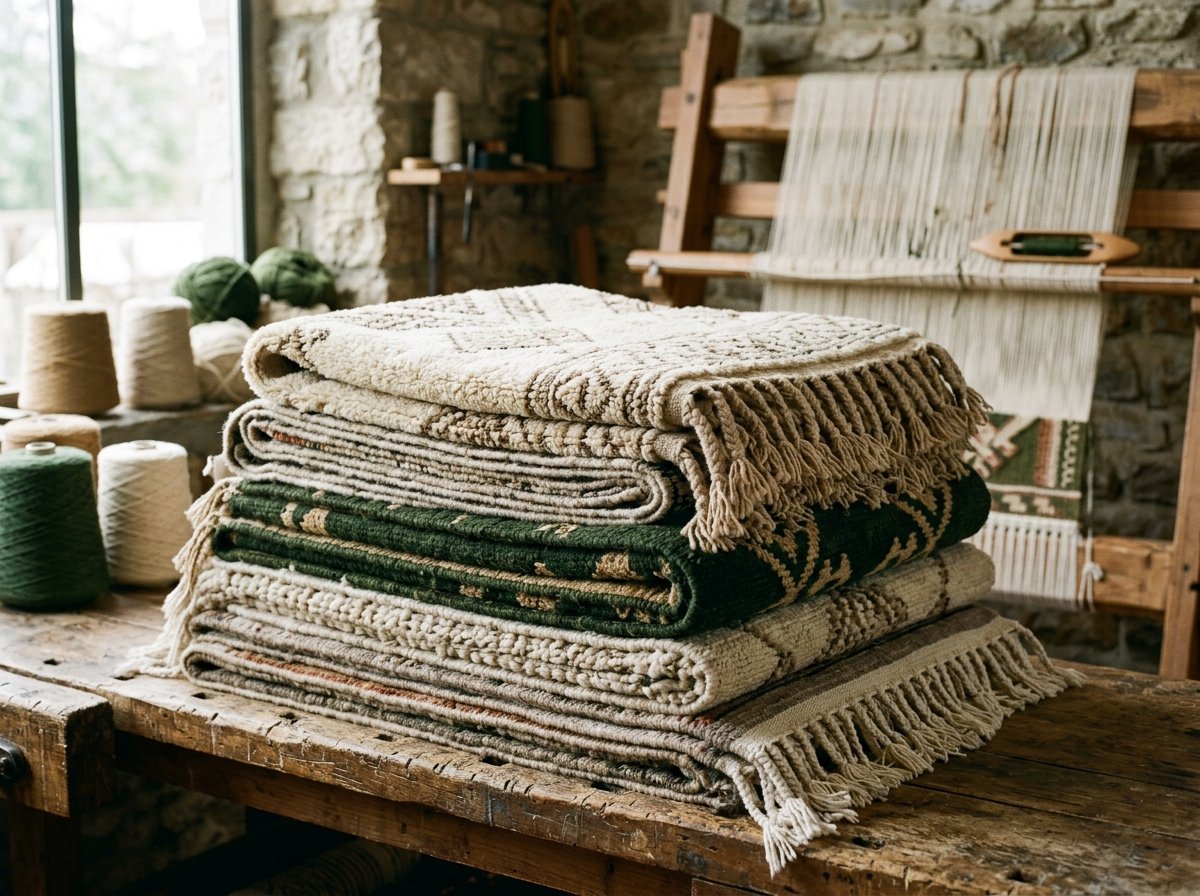
An area rug provides the foundational tactile plane in any room. By introducing variations in pile height—such as our hand-tufted relief techniques—light hits the carpet at differing angles throughout the day, generating subtle shadow play across the floor.
1. Begin from the Ground Plane
Seasoned interior architects establish the floor covering first. A rug made of un-dyed, hand-spun wool contains micro-variations of bone, sand, and taupe that set a natural, forgiving foundation for the entire room.
2. Contrasting Textures Over Saturated Pigments
Pair dense, low-sheen wool rugs with natural stone, light oaks, and minimalist architecture. The juxtaposition between soft yielding wool and solid floor planes produces effortless, enduring luxury.
3. Scale and Proportion
Never skimp on dimension. A generous 8×10 ft or 9×12 ft carpet anchors the room with grand proportion, defining the space with natural wool warmth underfoot.
Material Studies
September 24, 2026 • 4 min read
Un-Dyed Wools & Natural Fibers: Why Material Integrity Outlasts Synthetics
The purest rugs require no artificial chemical dyestuffs. Discover how we celebrate the natural fleece of highland sheep to produce warm, durable, hypoallergenic floor coverings.
Every fleece harvested from highland sheep tells an organic story of mountain terrain, climate, and pasture.
Unlike commercial synthetic carpets manufactured from extruded petroleum polymers, virgin wool is an inherently biodegradable, renewable protein fiber. Its cellular structure breathes with ambient humidity, trapping microscopic airborne dust particles until vacuumed away, acting as a natural air filter in interior spaces.
The Beauty of Natural Variation
When sheep are hand-sheared, their wool naturally ranges from warm cream and oatmeal to silvery grey and deep espresso brown. By carding and spinning these natural colorways without chemical bleaching or synthetic dyeing, we produce carpets that possess profound organic nuance.
Inherent Stain and Flame Resistance
Because virgin wool preserves natural lanolin wax, water and oil-based liquids bead up on the outer surface rather than instantly penetrating the yarn core. Furthermore, wool has a high ignition temperature, making it the safest flooring material for family homes and bedroom suites.
Artisan Craft
August 18, 2026 • 6 min read
Inside the Bhadohi Workshop: The Mathematics of Warp & Weft
Step inside our northern Indian weaving studio to witness the extraordinary patience and geometric precision required to tie 1.2 million knots on a vertical loom.
In an age of five-second digital attention spans, the creation of a hand-knotted carpet demands meditative slowness.
On a traditional vertical wooden loom in Bhadohi, thousands of taut cotton warp threads are strung vertically by hand. Two master weavers sit side by side on wooden benches, guided by a paper script known as a talim—the mathematical code of the carpet design.
Tying the Knot
With a curved steel knife and rhythmic dexterity, the weaver wraps a strand of wool yarn around two adjacent warp threads, pulls it down, and slices it free in a fraction of a second. This movement is repeated knot by knot across the width of the rug.
After each row of knots is tied, a heavy iron comb called a panja is hammered vigorously against the weft line to compact the knots into unbreakable density. A single 8×10 ft heirloom carpet can easily take four to five months of uninterrupted artisan concentration.